
Why IP Rating for Lab Equipment?

In the realm of laboratory equipment selection, the importance of considering the Ingress Protection (IP) rating is often overlooked. While industries like manufacturing, food & beverage, construction, and maritime have long recognized the significance of IP ratings in safeguarding equipment against solids and liquids, the laboratory sector has generally neglected this crucial specification.

What is in it for you?

This white paper sheds light on why the IP rating is equally relevant in laboratory environments, where lab balances may be exposed to dust, moisture, and potential spills. Explaining the IP rating system, which combines two numbers indicating protection against solids and moisture, the document emphasizes that even in laboratories, where awareness of such protection is lacking, the need for safeguarding against internal damage is paramount. The paper concludes with insights into diverse industries such as manufacturing, outdoor settings, marine applications, the food and beverage sector, and retail, illustrating the necessity of IP65 or higher-rated equipment in ensuring durability and functionality in varied environmental conditions.

Download the FREE Guide HERE

What is Clinical Validation?

At A&D medical, we don’t just state our monitors are accurate we prove it with rigorous clinical validation studies.  Whether you are using our professional office monitorsambulatory monitors, or your patients are taking measurements with a home monitor you can trust the measurements from our devices because they have been verified to be accurate.

What is Clinical Validation of a Blood Pressure Monitor?

Clinical validation is a formal study comparing the accuracy of a blood pressure monitor relative to the measurement of an observer using a mercury sphygmomanometer and stethoscope on a patient. Under this scenario, the trained healthcare practitioner uses the above tools in a controlled environment, with a prepared patient, and compares that reading to the blood pressure device in question.

Educating Patients is Key for Accurate Home Measurements

The first part is educating patients to obtain a reliable, accurate home blood pressure monitor.

  • Make sure your patients understand that their home monitor should be clinically validated.
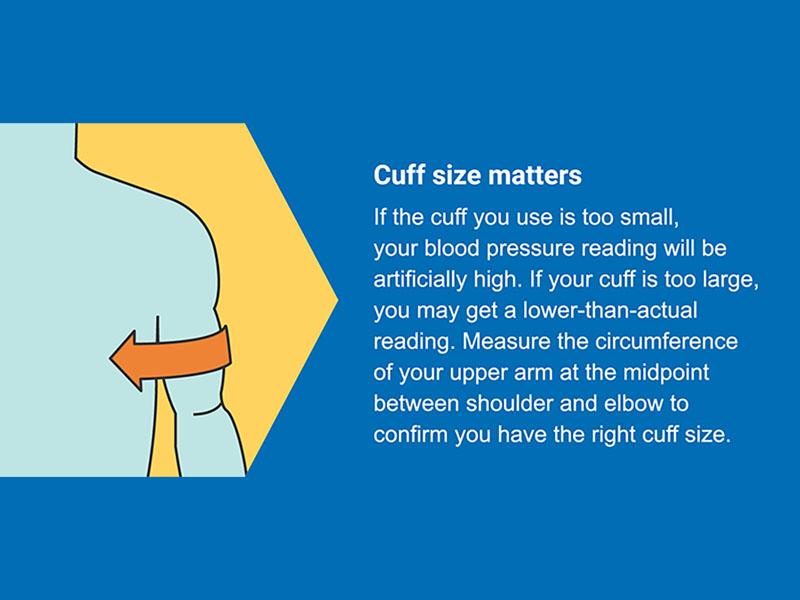
  • Instruct patients to measure their arm to make sure they have an appropriate size cuff.

The second part of education is using proper technique.

30 minutes before you take your measurement, do not exercise, do not drink coffee, caffeinated soda, or alcohol, and do not smoke. Sit quietly for 5-10 minutes to relax.

Press start. During your measurement, do not talk or move.

Sit on a chair with your back straight, your legs uncrossed, and your feet flat on the floor.

Secure the cuff snugly cuff on your arm or wrist. Rest your arm on a table for support and make sure the cuff is at heart level.