
Study Reveals Blue Light is as Beneficial as Medication in Decreasing Blood Pressure

Did you know that light plays a major role in our circadian system?  It regulates our circadian system by communicating with our eye’s light sensitive cells, which then signals the body clock of our brain.  This is how your body knows what time it is so that your organs work accordingly.  These sensitive cells are even more sensitive to blue light.  Recently, it was discovered that blue light helps in decreasing blood pressure.

It has become a known fact that blood pressure stays low during summer months as compared to the winter months.  A recent study examined the impact of blue light on blood pressure and revealed surprising results.  There are numerous health benefits of blue light exposure, including an impact on high blood pressure.  The positive impact of blue light has been found to be as effective as any other hypertension medication available on the market today.

Blue Light And Blood Pressure

The study1Stern, M., Broja, M., Sansone, R., Gröne, M., Skene, S. S., Liebmann, J., … Heiss, C. (2018). Blue light exposure decreases systolic blood pressure, arterial stiffness, and improves endothelial function in humans. European Journal of Preventive Cardiology, 25(17), 1875–1883. https://doi.org/10.1177/2047487318800072, published in the European Journal of Preventive Cardiology, reveals that blue light exposure is an effective treatment for lowering your blood pressure and simultaneously decreasing the risk of cardiovascular diseases.
The participants in this study were exposed to the blue light for 30 minutes, followed by control light exposure on a different day.  The researchers examined the blood vessel dilation, arteries stiffness, blood pressure, and nitric oxide’s blood plasma levels of the participants during, before and after the exposure of both lights.

They found that whole body exposure to blue light drastically lowered the levels of blood pressure of the participants by around 8 mmHg. There was however, no impact on the blood pressure levels with the controlled light exposure.

Health Benefits of Blue Light

Aside from lowering the systolic blood pressure, exposure to blue light offers numerous health benefits, including the following:

  • Decrease in the stiffness of arteries.  The participants in the study experienced lowered pulse wave velocity and lowered forearm vascular resistance.
  • Enhanced flow of blood.  The participants in the study experienced an increase in flow-mediated dilation and forearm blood flow – the former refers to the artery’s capacity of widening in reaction to the increase in the flow of blood.
  • Encouragement of nitric oxide release.  The participants in the study showcased enhanced nitric oxide circulation and concentrations of nitroso species in their plasma.  Remarkably, the systolic blood pressure reduction after light exposure for 30 minutes was linked to the plasma nitroso species changes.

The best part is that all these health benefits of blue light exposure come with no side effects that have been linked to blood pressure medications2N Engl J Med 2015; 373:2103-2116, DOI: 10.1056/NEJMoa1511939.  The light exposure levels in the study have been rather realistic and almost the same as the exposure you get during a typical sunny day.  Indeed, you would have to regularly experience the exposure to blue light in order to enjoy these health benefits long-term.

It is not unrealistic to assume that regular exposure to blue light, along with the consumption of healthy and antihypertensive foods like olive oil and cherries can result in making a major impact on the high blood pressure levels.


A Plan of Action is Needed to Prevent Atrial Fibrillation Strokes in Europe

The increasing number of cases related to strokes caused by atrial fibrillation is alarming for the European healthcare industry. Clinical studies suggest that individuals suffering from atrial fibrillation are 3 to 5 times at risk of suffering from a stroke; and that a quarter of middle-aged adults will at some stage of their life develop atrial fibrillation.

Currently, strokes caused by atrial fibrillation are estimated to cost European countries €38 billion annually. This is because they are more difficult to manage as compared to non-atrial fibrillation related strokes.

Strokes caused by atrial fibrillation have a high mortality rate and are becoming increasingly common in today’s aging population.  It is estimated that by 2060 over 18 million adults in Europe over the age of 55 will have atrial fibrillation.  Based on this information, a plan of action needs to be prepared to prevent atrial fibrillation strokes in Europe.  Policymakers and stakeholders must work unanimously and at all levels to address this growing health issue and prevent its prevalence.

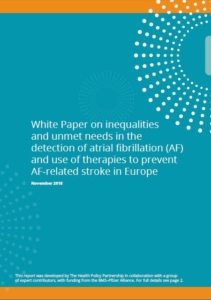
A white paper released by Arrhythmia Alliance  in 2018 highlights the inequalities and gaps that persist in the community, which is giving rise to atrial fibrillation-related strokes.  The white paper also offers driven solutions that can lower the risk of strokes in people with atrial fibrillation.

The paper identifies some areas of concern that have led to the escalating number of cases pertaining to atrial fibrillation-related strokes.  It suggests that newly diagnosed patients with atrial fibrillation lack knowledge and information about their condition, which negatively impacts both their health and experience of care.

Another area of concern is insufficient atrial fibrillation detection practices in care settings.  Care settings don’t offer proper screening facilities to patients to help them minimise the risk of developing atrial fibrillation.  The condition is only detected after the patient has suffered from a stroke related to atrial fibrillation.

Apart from this, as professionals have limited understanding of and training in, atrial fibrillation, they are unable to support the needs of patients adequately.  Healthcare professionals face difficulties in atrial fibrillation detection. They have problems in both using and interpreting risk assessment scores.  The lack of clinical training and understanding in atrial fibrillation limits professionals from providing excellent level of support and care to patients, which is crucial to ensure their fast recovery.

Awareness and accountability among policy and decision-makers is crucial.  At present, strokes caused by atrial fibrillation are under-represented in policy, which further contributes to inequalities.  A national plan targeting the prevention of atrial fibrillation must be devised to reduce the staggering number of cases.

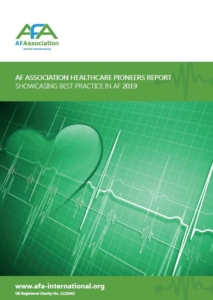
For more information on this and to learn about the suggested solutions to all these areas of concerns, download the white paper by Arrhythmia Alliance on Inequalities and Unmet Needs in the Detection of Atrial Fibrillation (AF) and use of Therapies to Prevent AF‑Related Stroke in Europe or the report by AF Association on AF Association Healthcare Pioneers Report Showcasing Best Practice in Atrial Fibrillation 2019.

Arrythmia Alliance White Paper

Inequalities and unmet needs in the detection of Atrial Fibrillation (AF) and use of therapies to prevent  AF‑related stroke in Europe

AF Association Report

Pioneers report showcasing best practice in Atrial Fibrillation 2019

400km Above the Earth’s Surface

A&D’s Blood Pressure Monitor on the International Space Station

A&D’s technology helps build power stations, bullet trains and rockets but our Upper Arm Blood Pressure Monitors unit may be A&D’s first product to leave the stratosphere.  If the ISS relies on the high performance, reliability and accuracy of A&D’s blood pressure monitoring technology, then so can you!

In this Russian documentary, cosmonaut Sergey Volkov is using an A&D BPM to monitor his blood pressure (starting at time stamp 4:50) as part of regular health checks performed daily.

This activity was part of a yearlong mission aboard the ISS in 2016 to research the medical, psychological and biomedical challenges faced by space explorers during long-duration spaceflight.

A&D UA-767S Upper Arm Blood Pressure Monitor

The UA-767S is the latest in the range of UA-767 devices from A&D – our flagship model since 1985.

It benefits from our 2nd generation IHB technology, which now measures the frequency of IHB (Irregular Heart Beat) detection as well as screening for Atrial Fibrillation – shown by icons and divided into different grades. This now enables the user/clinician to see how often IHB/AFib has been detected – indicating the level of risk to the patient. If the grade is high, you should consult a doctor immediately.

Features:

  • 3rd generation of the flagship UA-767 range
  • A&D’s Slimfit™ Cuff – latex and metal free, covering 22-32cm
  • 2nd generation IHB/AFib (Irregular Heart Beat) Indicator to show frequency IHB/AFib%
  • Cuff Fit Error Indicator
  • Movement Error Indicator
  • WHO Blood Pressure Classification Indicator
  • 60-memory + Average Reading
  • ESH Clinical Validation

Causes of High Blood Pressure

High blood pressure is a serious health issue and is now becoming more common and a growing concern in the United Kingdom.

This is clearly evident from the following facts and statistics published by Public Health England:

  • High blood pressure affects nearly 1 in 4 individuals,
  • It is the third-biggest risk factor for premature deaths and disability, after smoking, in England,
  • At least ½ of all the cardiac arrests and strokes are linked with high blood pressure,
  • It is also among the major risk factors for developing chronic kidney diseases and dementia, Over 5.5 million individuals in England have undiagnosed high BP and remain untreated, thereby putting their lives at serious risk.

High blood pressure is estimated to affect over 1.5 billion individuals worldwide by the year 2025.

What is High Blood Pressure?

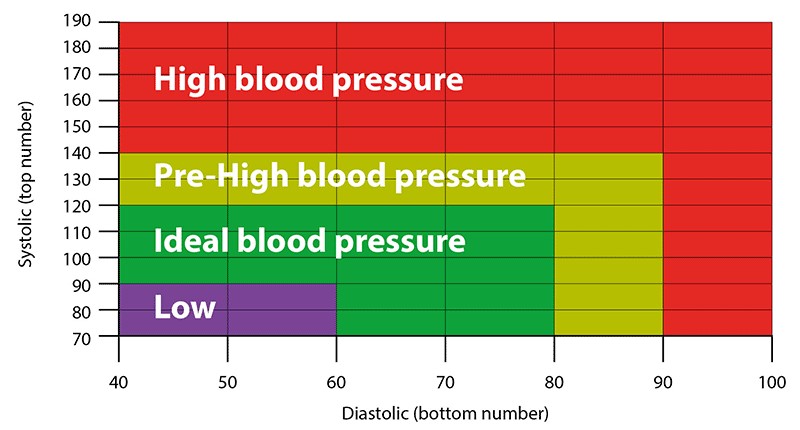
High blood pressure, occurs when the pressure of your blood is persistently higher than the pressure that is considered normal. The optimal blood pressure rate is under 120/80mmHg.  Readings above this range (for example, 130-139/80-89) are considered as stage 1 high blood pressure, while stage 2 is 140 and above/90 and above.

Blood Pressure Chart

Blood Pressure Chart

High blood pressure can be dangerous because the heart has to work harder to pump blood to the body and further leads to hardening of the arteries, thereby increasing the risk of developing a stroke and heart failure.  Although the exact causes of high blood pressure are still unknown, there are many factors linked to it.  These factors are believed to have a strong influence on blood pressure, thereby increasing the likelihood of developing the condition.

Age

It is estimated that approximately 1 in 2 individuals over 65 have high blood pressure.  This indicates that you may be exposed to the risk of high blood pressure as you age.

Family History

Studies also show that family history also increases the risk of high blood pressure.  So, if high blood pressure tends to run in your family then it’s important that you closely monitor yours and manage it proactively to reduce the chances of developing it in the future.

Obesity

It is believed that people who are overweight or obese can develop high blood pressure.  This is backed by the fact that as your weight increases, more blood is needed by your body to supply nutrients and oxygen to the tissues. So, when the volume of blood circulation through the vessels shoots up, so does the pressure on the walls of your arteries.

A Diet Rich in Sodium and Poor in Potassium

Your diet also influences your blood pressure level. If your diet is rich in sodium and has very little potassium, it can increase your likelihood of developing high blood pressure.  This is because sodium causes the body to retain fluid, while potassium helps balance the amount of salt in the cells.  So, if your diet has too much salt and little potassium, you will retain and accumulate salt in the blood, thereby putting you at risk of high blood pressure.

Other potential causes include:

  • High alcohol intake,
  • Stress,
  • Minimal physical activity, and
  • Frequent use of tobacco.

To lower the risk of developing high blood pressure, monitor and manage your blood pressure at home yourself. Consider investing in a high quality home blood pressure monitoring machine, such as A&D’s UA-651BLE Upper Arm Blood Pressure Monitor with Smart Bluetooth Low Energy Connectivity to check your blood pressure daily.  It is easy to use, and offers reliable and accurate reading.  Also, seek proper treatment and adopt a healthy lifestyle to minimize your risk.

A&D UA-651BLE Upper Arm Blood Pressure Monitor with Bluetooth® Smart Bluetooth® Low Energy Connectivity

The UA-651BLE is the 4th generation of the range of A&D telehealth blood pressure monitors, and is designed for the home user as part of the ‘wellness connected™’ family of products and free app, A&D Connect.

Features:

  • 4th gen. blood pressure monitor telehealth range
  • Bluetooth® Version 4.0LE/ Bluetooth® Smart communication
  • Continua™ Certified – to ensure interoperability
  • Compatible with UC-352BLE scales and UT-201BLE thermometer
  • A&D’s Slimfit™ Cuff 22-32cm
  • 2nd gen. IHB Indicator
  • WHO Blood Pressure Class.Indicator
  • Internal 30-memory + Average Reading
  • ESH Clinical Validation

Saving time with the Wellpoint Kiosk

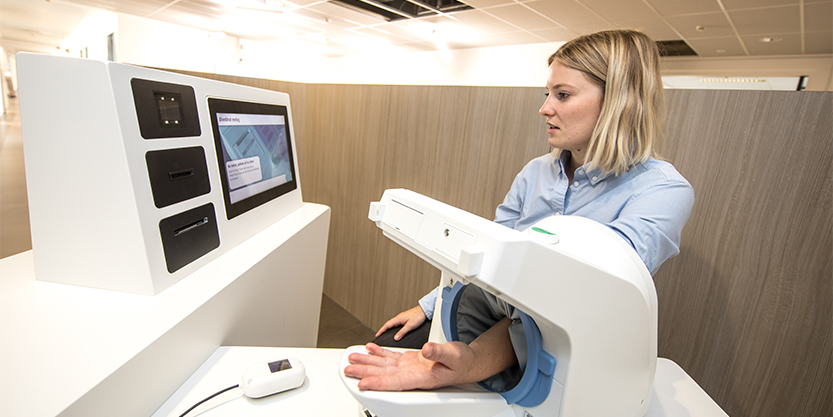
The consulting time of medical specialists at the University Hospital Antwerp has been fundamentally improved over the past two years. The screening of blood pressure, heart rate, height, weight, BMI and temperature is no longer done by a doctor, nurse or clinician but by the patient himself.  This has been possible thanks to the WellPoint Kiosk featuring the A&D TM-2657P Waiting Room Monitor.  Professor Dr. Guy Hans, medical director of the University Hospital talks more about it.

The WellPoint Kiosk is a collection of devices with which the patient can independently measure his/her vital parameters, such as blood pressure, heart rate, weight and temperature.  In addition, the patient can provide the healthcare professional with other clinically desired information by completing personal validated questionnaires for pre-screening and risk assessment.  The results are immediately passed to the Electronic Medical Record (EMR) and therefore do not have to be entered manually, saving time and reducing data entry errors.  Healthcare professionals can immediately discuss the results with the patient during consultation hours.

At UZA, there are six of these kiosks embedded in the hospital flow.  Plans for further expansion contain the integration of this kiosk to keep the patient flow within the hospital as efficient as possible.

“The decision to work with this kiosk stems from the accreditation requirements set by JCI” says Professor Hans. “When we were working on accreditation to comply with the JCI quality standard for safe and quality care1, it became clear that we had a problem: we did not have the minimal clinical data of patients required”

This is a problem that is not unique to UZA. According to Professor Hans, many hospitals do not have this minimal set of patient data.

“In order to meet the quality standards for accreditation of JCI, UZA went in search of a solution to gather this patient data on a wide scale. We found this in the WellPoint Kiosk.”

Working with the kiosk has several advantages according Professor Hans.

“Thanks to the kiosk, we receive the results of the vital parameters from every patient who comes here during consultation hours. In this way, the physician has an up-to-date and accurate ‘snapshot’ of the patient’s physical condition during the consultation. Another important advantage is time saving; care providers do not have to take measurements manually anymore. That saves about 6 minutes per patient. Multiplied by the tens of thousands of patients who visit the UZA every year … that time saving is therefore enormous”.

Professor Hans emphasizes that UZA uses the time gained to optimize and improve the quality of care rather than to reduce costs.

Professor Hans commented that the quality of the consultation hours has greatly improved thanks to the kiosk.

“As soon as the patient enters my office, I have the vital parameters needed to start the conversation.  In addition, the kiosk is a great tool for working on primary prevention. We often see patients who have no symptoms but with this standard screening process, an increased blood pressure or a deviation in, for example the heart rate, is noticed.  If the doctor suspects abnormal / concerning results, he can immediately take action, consider referral to a specialist or back to the GP.  In particular, from a preventive point of view, the Kiosk is a particularly valuable addition to the care we provide as UZA.  Its something we couldn’t do without!”

1 https://www.jointcommissioninternational.org/

TM-2657P Waiting Room Blood Pressure Monitor

The TM-2657P is the latest model in the range of A&D freestanding fully automatic blood pressure monitors. Designed for high foot fall areas to save time and money offering a Return on Investment (ROI) normally within 6 months.

Features:

  • Can be integrated into Electronic Patient Record solution (EPR)
  • User-friendly small footprint & barrier-free design
  • Simple to use, one-touch measurement
  • Network connectivity options using Bluetooth or RS-232
  • Reliable high speed printer with easy paper replacement
  • Irregular Heart Beat (IHB) indicator
  • BHS A/A Clinically Validated

What is Atrial Fibrillation?

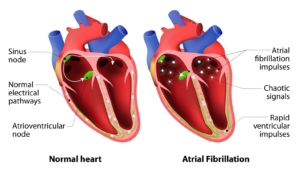
Atrial fibrillation (AF) is a type of irregular heartbeat. It occurs when your heart is not pumping as well as it should, resulting from a disturbance in the electrical conduction pathways in the heart.  A condition more common with advancing age, if left untreated can lead to serious complications such as heart failure and stroke.

Being the most common sustained heart rhythm disturbance (arrhythmia)1 and affecting 1 in 4 middle-aged adults at some point in their life2, people with AF are three to five times more likely to suffer a devastating, debilitating, disabling and often fatal stroke than people without AF.

Resulting from a disturbance in the electrical conduction pathways in the heart leading to an irregular pulse which can often be quite rapid, AF often contributes to symptoms of palpitations, shortness of breath, chest discomfort, light headedness, fainting and fatigue.

The Scale of the Problem

AF-related strokes cause unacceptably high levels of death and disability, and the scale of the problem across Europe is increasing as our populations age.

By 2035 the number of strokes is projected to rise by 34%, to over 800,000 events.3  At the same time, the number of people with AF is increasing and, by 2060, it is estimated that nearly 18 million adults over the age of 55 will have AF.4

Screening for Atrial Fibrillation

No country has yet established a national screening programme (NSP) for AF, including the UK.  However, there is an increasing body of evidence suggesting screening may be beneficial, prompting recommendations from prominent expert bodies to screen for AF.5  The British Cardiovascular Society issued a statement suggesting that it would be in the public interest to initial such a screening programme.6

Several factors have led to an increased interest in AF screening.8

The prevalence of AF is increasing due to a combination of population ageing, changing patterns of risk factors, and improved survival rates in other, contributory forms of cardiovascular disease.

Newer treatments are available in the form of novel oral anticoagulants (NOACS), which are safer, at least as effective as the existing treatment mainstay of vitamin K antagonists, and simpler to use (as they do not require regular blood tests).

A number of relatively inexpensive screening devices for detecting AF in the community have been developed and the field may evolve rapidly as new technologies and algorithms emerge.

Ambulatory Blood Pressure Monitors

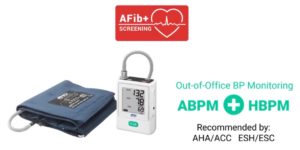
Ambulatory Blood Pressure Monitors (ABPMs) provide testing to determine the presence of hypertension by taking measurements during normal daily activities, over a span of 24 (or more) hours. They help to diagnose as well as monitor high blood pressure (hypertension), usually defined as a systolic pressure of 140 mm Hg or more and a diastolic pressure of 90 mm Hg or more.


ABPMs are portable blood pressure devices worn on a belt, with the cuff being attached around the upper arm. All types of daily activities, including sleep, may be normally carried out while wearing this device.

Benefits of ABPM

By giving an accurate picture of a patient’s blood pressure throughout the day and during sleep, it can prevent unnecessary prescribing of hypertension-reducing drugs for white coat hypertension. It also helps patients with masked hypertension to receive required treatment. It reduces the risk of stroke, heart disease, and organ damage caused by hypertension, and also shows how well a person responds to a long-acting antihypertensive drug.

Footnotes

  1. Camm AJ, Kirchhof P, Lip GY, et al. 2010. Guidelines for the management of atrial fibrillation: the Task Force for the Management of Atrial Fibrillation of the European Society of Cardiology (ESC). Eur Heart J 31(19): 2369-429
  2. Kirchhof P, Benussi S, Kotecha D, et al. 2016. 2016 ESC Guidelines for the management of atrial fibrillation developed in collaboration with EACTS. Europace 18(11): 1609-78
  3. Stroke Alliance for Europe. 2017. The burden of stroke in Europe. London: Stroke Alliance for Europe
  4. Krijthe BP, Kunst A, Benjamin EJ, et al. 2013. Projections on the number of individuals with atrial fibrillation in the European Union, from 2000 to 2060. Eur Heart J 34(35): 2746-51
  5. Kirchhof P, Benussi S,Kotecha D,et al. (2016) 2016 ESC guidelines for the management of atrial fibrillation developed in collaboration with EACTS. Eur Heart J 37(38):28932962
  6. British Cardiovascular Society (2014) BCS statement on screening for atrial fibrillation to prevent stroke (BCS), http://www.bcs.com/pages/news_full.asp?NewsID=19792297 (accessed 22 May 2017).

Taking the Pulse at Medica 2018!

A&D had a fantastic Medica 2018. It was great to catch up with so many familiar faces and meet some new ones too. We showcased several new products and technologies:

AFib Plus Range of Blood Pressure Monitors
All new ABPM with AFib+™, PatientView360™ and SmartCheck™
UltraConnect™ Connected Blood Pressure Monitors

If you missed us at the show, here are some of the highlights.

A&D TM-2441

The lightest and smallest Ambulatory Monitor …

… with AFib+ Screening Technology!

Launching AFib+ Screening Technology at MEDICA 2018 Düsseldorf, Germany!


Attracting more than 5,100 exhibitors from 70 countries in 17 halls and tens of thousands of national and international experts and decision-makers from the sector, Medica 2018 presents an extensive exhibition and an ambitious program — which together present the entire spectrum of innovations for outpatient and clinical care.

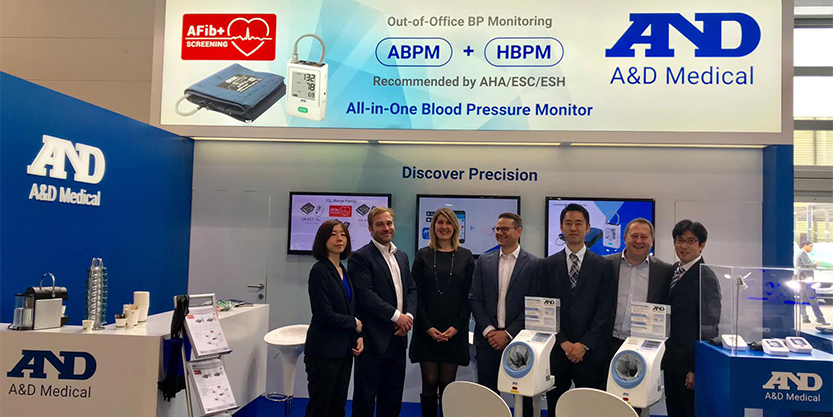
The A&D Medical Team are excited to launch a range of new products at the show.  Come visit us at Hall 11 Stand D78.

A&D Pharmacy Show News


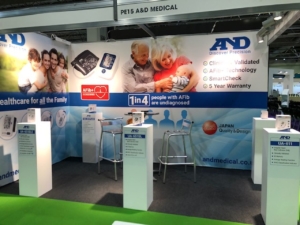
At the beginning of the month, a team from ADI exhibited at The Pharmacy Show 2018 in Birmingham, the largest sourcing and networking event for pharmacy professionals in the UK.
The team worked hard to showcase A&D’s medical products to over 8,900 pharmacy owners, wholesalers, buyers, distributors and decision makers, in a dedicated trade environment to the pharmacy market.

We showcased UA-611Plus, SmartCheck and AFib+ technologies and with the intense focus on screening for Atrial Fibrillation across the country due to it being the most common sustained cardiac arrhythmia affecting about 1.3% of the population in England and Wales, this attracted a huge amount of interest from pharmacists.

One of the highlighted presentations at The Pharmacy Show was “Capture AF Community pharmacist led Atrial Fibrillation Detection and Treatment Programme”, showing the growing importance of AF screening. A&D are well placed as being in line with supporting the increasing role of the pharmacists in AF detection and management with the development of the range of AFib+ medical devices.

All around a successful show for A&D Medical.


Meet us at the Pharmacy Show NEC Birmingham 7-8 of October


We are delighted to let you know, that we will be exhibiting at The Pharmacy Show in Birmingham at the NEC on Sunday the 7th and Monday the 8th of October 2018.

You can find us at Stand PE15 as per the link below.

Where to find us – Floorplan

Please register for free and meet our A&D Medical Team. We are looking forward to see you there!

Register here for your free ticket

A & D Medical Invite