
400km Above the Earth’s Surface
A&D’s Blood Pressure Monitor on the International Space Station
A&D’s technology helps build power stations, bullet trains and rockets but our Upper Arm Blood Pressure Monitors unit may be A&D’s first product to leave the stratosphere. If the ISS relies on the high performance, reliability and accuracy of A&D’s blood pressure monitoring technology, then so can you!
In this Russian documentary, cosmonaut Sergey Volkov is using an A&D BPM to monitor his blood pressure (starting at time stamp 4:50) as part of regular health checks performed daily.
This activity was part of a yearlong mission aboard the ISS in 2016 to research the medical, psychological and biomedical challenges faced by space explorers during long-duration spaceflight.
A&D UA-767S Upper Arm Blood Pressure Monitor
The UA-767S is the latest in the range of UA-767 devices from A&D – our flagship model since 1985.
It benefits from our 2nd generation IHB technology, which now measures the frequency of IHB (Irregular Heart Beat) detection as well as screening for Atrial Fibrillation – shown by icons and divided into different grades. This now enables the user/clinician to see how often IHB/AFib has been detected – indicating the level of risk to the patient. If the grade is high, you should consult a doctor immediately.
Features:
- 3rd generation of the flagship UA-767 range
- A&D’s Slimfit™ Cuff – latex and metal free, covering 22-32cm
- 2nd generation IHB/AFib (Irregular Heart Beat) Indicator to show frequency IHB/AFib%
- Cuff Fit Error Indicator
- Movement Error Indicator
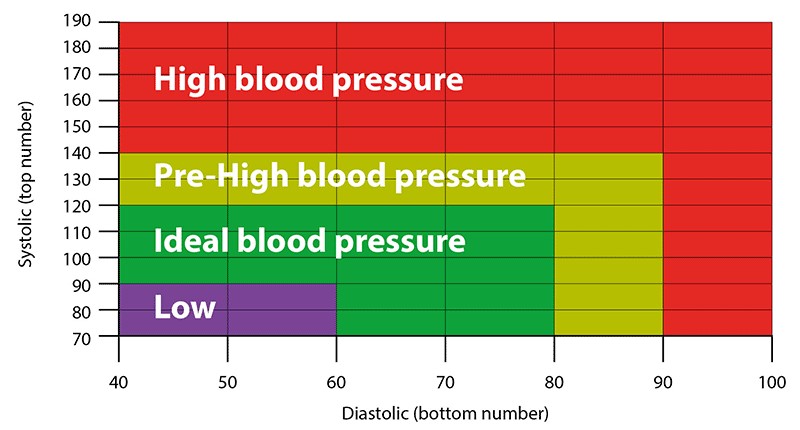
- WHO Blood Pressure Classification Indicator
- 60-memory + Average Reading
- ESH Clinical Validation




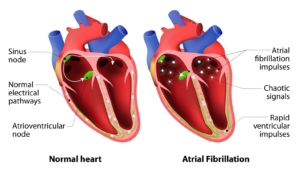
 AF-related strokes cause unacceptably high levels of death and disability, and the scale of the problem across Europe is increasing as our populations age.
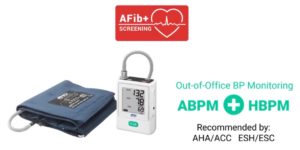 Ambulatory Blood Pressure Monitors (ABPMs) provide testing to determine the presence of hypertension by taking measurements during normal daily activities, over a span of 24 (or more) hours. They help to diagnose as well as monitor high blood pressure (hypertension), usually defined as a systolic pressure of 140 mm Hg or more and a diastolic pressure of 90 mm Hg or more.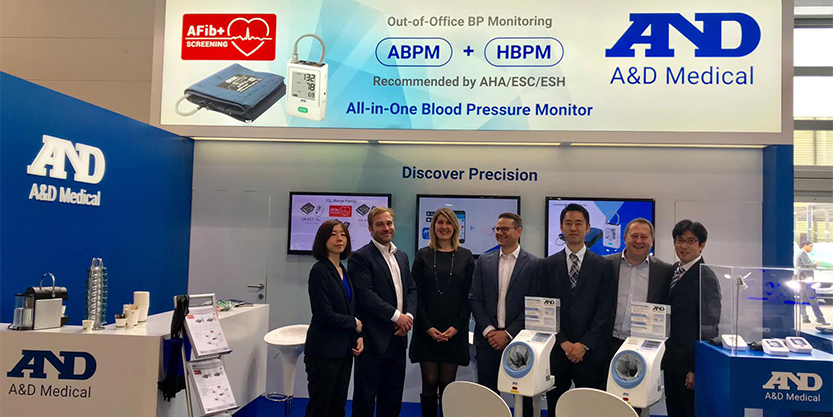


 Attracting more than 5,100 exhibitors from 70 countries in 17 halls and tens of thousands of national and international experts and decision-makers from the sector, Medica 2018 presents an extensive exhibition and an ambitious program — which together present the entire spectrum of innovations for outpatient and clinical care.